Paul Ehrlich - Author Of The Population Bomb - Dies At 93
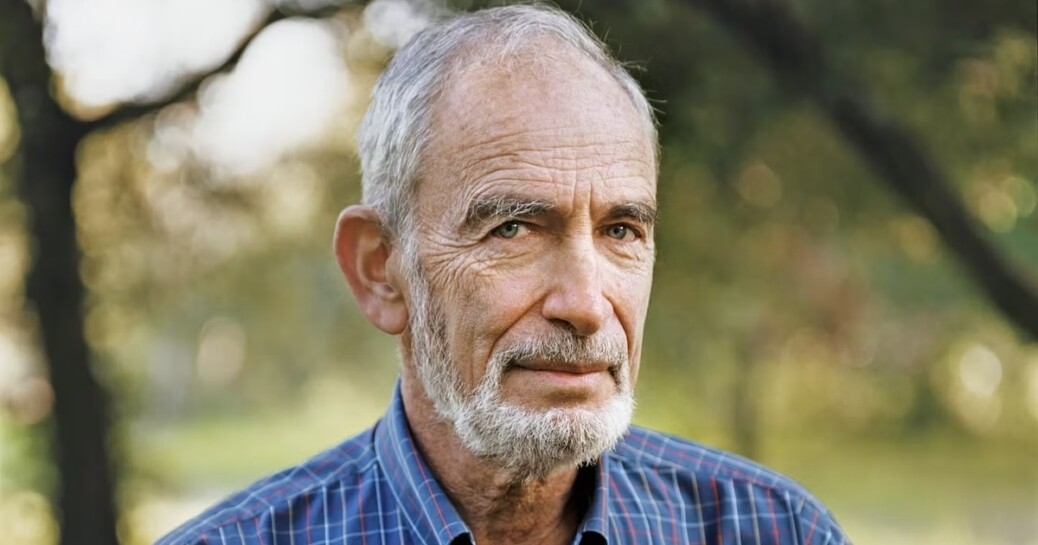
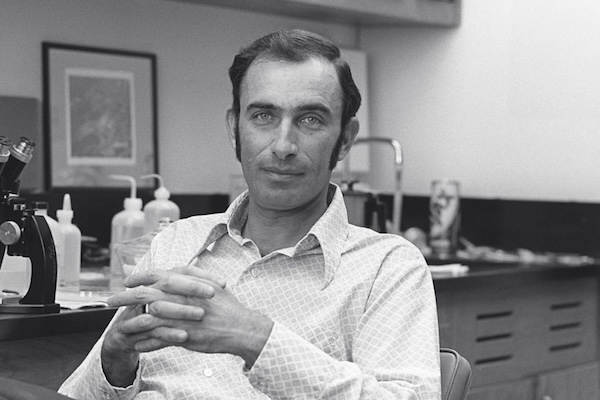
Paul R. Ehrlich, the American biologist, environmentalist, and author of the controversial book The Population Bomb, died yesterday – March 13th 2026 – at the age of 93.
Formerly the Bing Professor of Population Studies at Stanford University’s Department of Biology, Ehrlich was best known for his predictions and warnings about the consequences of human population growth.
Paul Ehrlich‘s core neo-Malthusian message was simple; that overpopulation posed a grave risk to humanity and that millions would die from hunger as food supplies globally became increasingly scarce.
In 1968, Ehrlich, along with his wife Anne, published the bestselling book The Population Bomb. From the opening page, The Population Bomb predicted worldwide famines due to overpopulation, as well as other major societal upheavals, and insisted urgent action was required to limit human population growth.
The book begins with the hard-hitting opening line: “The battle to feed all of humanity is over. In the 1970s and 1980s hundreds of millions of people will starve to death in spite of any crash programs embarked upon now”. Ehrlich went on to write that massive social and environmental breakdown would occur by the end of the twentieth century.
Ehrlich’s book, lectures and public comments caused much division amongst both the public and his peers. He was embraced by the environmental movement of the day, whilst labelled by his critics as a “prophet of doom”.
Over half a century later, it’s easy to brush Ehrlich’s warnings aside by highlighting that his predictions didn’t turn into reality. But those with an understanding of the overpopulation problem are quick to point out that the detractors are missing the point.
As was the case with Thomas Malthus two centuries earlier, Ehrlich’s predictions only proved wrong because he underestimated the extent that man could and would go to provide the extra food and resources necessary to support an ever increasing population. Even 50 years ago, he would have been unaware of how quickly technology would advance and how those advances would be employed in agriculture, livestock breeding and the further extraction of natural resources from the planet.
He would also have been unaware that policy makers and health organisations would fund programs to make birth control more widely accessible. In the 1960s, the world’s fertility rate had hit its all-time high of 5 children per woman. If that rate hadn’t halved over the next few decades, today we would have 12 billion people on the planet instead of 8.3 billion, and humanity would have hit environmental and resource limits sooner and harder than is now likely to happen later this century.
Ehrlich’s legacy, therefore, will always be how he helped to shape the world’s thinking. As a scientist, biologist, and naturalist, he empowered the environmentalist movement, making the unpalatable topic of overpopulation, if not palatable, then at least more widely discussed.
Saying ‘it’s only consumption, it’s not the number of people that counts’ is like saying ‘the area of a rectangle is determined only by it’s width, not by it’s length’. Certainly, consumption is a big problem. So is population size. The two multiply together to give you your impact on your life support systems. Professor Paul R. Ehrlich
He founded Stanford’s Center for Nature and Society in 1984, and wrote more than 40 books and over 1,100 scientific articles on ecology, the environment and population dynamics.
He welcomed and encouraged the idea of a shrinking human population, a necessity he understood largely because he was a biologist. He was able to tune out political noise and observe humanity as one species amongst many on our planet, all subject to the same basic needs and limits.
Although The Population Bomb is the book with which Ehrlich is most closely identified, his many other books and papers include important works on birds, human ecology, and conservation biology. He was as insightful as he was controversial, and his work deserves continued attention.
In today’s world, where increasingly more political and industrial leaders appear driven by narcissism or profit-centric thinking, we need people like Paul R. Ehrlich. He was a man of his time, and the time for warnings is drawing to an end as the age of consequences dawns.
Paul R. Ehrlich, May 29, 1932 – March 13, 2026.

Got something to say about this? Join the discussion now!
Remember, you need to be registered to take part.
- This topic is empty.